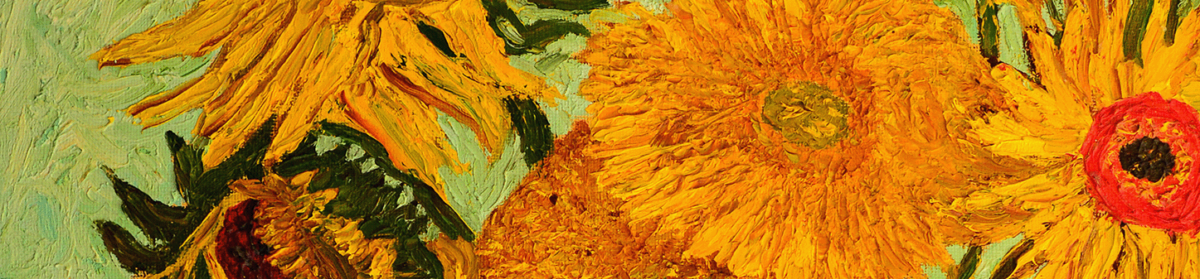
Historical Fiction About Remarkable Women History Forgot
Through uplifting, dual-timeline historical fiction, Marta Molnar brings to light the stories of Johanna Bonger, Suzanne Valadon and Helen Churchill Candee—three remarkable women whose courage and accomplishments deserve to be remembered.
History has selective memory.
History books remember the celebrated artists, the powerful leaders, and the greatest villains. And somehow, they’re nearly always men. Have you ever noticed how, for the most part, history tends to forget the women?
That’s what brought me to the Light & Life series. I was watching a documentary on the Impressionists that talked about Vincent van Gogh, and just in a sentence or two they mentioned that Vincent only sold one painting during his life. His sister-in-law Johanna made him famous, after his death.
“What?” I might have blurted at the TV. How have I not heard of her before? I’m a total art nut. I paint (badly) and watch art documentaries for fun (see above). I started researching Johanna, and the more I found out about her, the more convinced I was that everyone should know her.
I was deeply inspired by Johanna Bonger (and then in later books Suzanne Valadon and Helen Churchill Candee). I wanted to write about that feeling, how the past can provide support and motivation. I wanted readers to get lost in my books and think, Yes, I can! after the last page is turned.
My stories are not stories about women who waited for history to happen to them! They are stories about women who changed history, and then nearly disappeared from it.
Three hurrays for historical fiction! Historical fiction has the power to restore what the historical record leaves out. My novels are inspired by real people and events. Through my books, I do my best to introduce exceptional women of the past to a modern-day audience. I would hate for them to be forgotten.
For centuries, women’s achievements were less likely to be documented, preserved or taken seriously. Women often worked behind the scenes because society denied them access to universities, professional organizations, political power and financial independence. Even when they achieved success during their lifetimes, their achievements were quickly forgotten after their deaths.
Sometimes a husband, son or male colleague became famous while the woman’s contribution disappeared. Sometimes her accomplishments were reduced to a footnote. Sometimes history remembered the one dramatic event in her life but forgot everything else.
The more I research, the more I find, and the more stories I want to write.
What can these women teach me? Teach us?
The Secret Life of Sunflowers
The woman who made Vincent van Gogh famous
Most of the world knows Vincent van Gogh. Far fewer people know Johanna Bonger, the woman responsible for preserving his work and building his legacy.
When Vincent died in 1890, he was largely unknown. His brother, Theo, died only six months later, leaving Johanna widowed with an infant son and stacks of Vincent’s paintings.
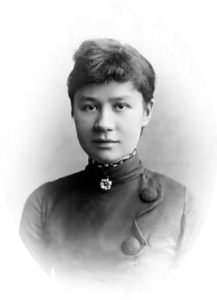
The art establishment had little interest in the work. Johanna had little money, few professional connections and no obvious reason to believe that the world would ever recognize Vincent’s genius.
But she believed.
Johanna saved the paintings, organized exhibitions, cultivated relationships with artists and critics, and published the brothers’ letters. Through years of determined work, she helped transform Vincent van Gogh from an overlooked artist into one of the most famous painters in history.
In the contemporary timeline, Hollywood auctioneer Emsley Wilson inherits a mysterious diary while her own carefully constructed life is falling apart. As she uncovers Johanna’s story, she begins to understand that the end of one life can become the beginning of another.
The Secret Life of Sunflowers is historical fiction about art, grief, reinvention, and the astonishing power of one woman’s faith in another person’s gift.
Once a manuscript that every publisher rejected, the novel has now reached more than half a million readers.
Kindle Nook iBooks Google Kobo
[Discover The Secret Life of Sunflowers]
Girl Braiding Her Hair
The Model Who Learned to Paint While She Posed
You have probably seen Suzanne Valadon without knowing her name.
She modeled for Renoir, Toulouse-Lautrec and other celebrated artists of Montmartre. She appears in some of the most recognizable paintings of the period—but Suzanne did not intend to remain someone else’s subject forever.
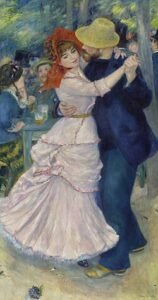
A bastard without a father, born into poverty, Suzanne had no access to formal artistic training. She worked from childhood, as a waitress, horse walker, funeral wreath maker, and even a circus acrobat, before she eventually became a model. As she became more and more popular, while she posed, she carefully observed the painters around her: their materials, their movements, and the way they captured light and form.
She taught herself to paint by simply watching.
Suzanne became the first woman admitted to France’s prestigious Société Nationale des Beaux-Arts. She created bold, unsentimental work that challenged conventional portrayals of women and the human body. She earned respect during her lifetime, yet after her death, her obituary identified her only as the wife of an artist and the mother of an artist.
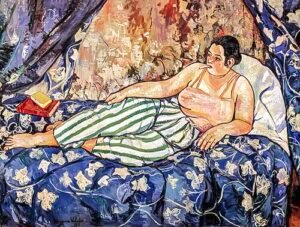
Oh, heck no, I thought, and started writing a book about her.
In the contemporary timeline of the book, Ellie discovers that her employer has been taking credit for her work. Inspired by Suzanne’s refusal to remain invisible, Ellie embarks on an audacious new project: a museum dedicated to the art hidden in storage and rarely seen by the public: The Museum of Unseen Art.
Girl Braiding Her Hair is historical fiction about female artists, stolen credit, creative ambition, and the courage to claim your own work.
Kindle Nook iBooks Google Kobo
[Discover Girl Braiding Her Hair]
Raising the Titanic
The survivor whose life was bigger than the shipwreck
Helen Churchill Candee survived the sinking of the Titanic—but that may be the least remarkable thing about her.
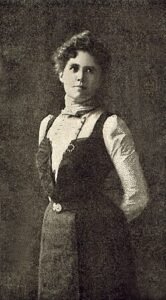
Before stepping aboard the ship, Helen was already a bestselling author, journalist, interior designer who’s done projects for the White House, and advocate for women’s independence. After the disaster, she refused to let one terrible night define the rest of her life.
During World War I, Helen worked as a volunteer nurse in Italy, where she helped care for the wounded Ernest Hemingway. She marched for women’s suffrage, traveled through Southeast Asia on the back of an elephant (!), studied ancient cultures and wrote influential books about her journeys. She entered places few Western women of her era had ever seen and built an independent life decades ahead of its time.
In the contemporary timeline of the novel, forensic artist Madison McClain receives an invitation to an intriguing project that might just change her life. Her connection to Helen’s story reveals that survival is not simply returning to the person you were before disaster struck. Sometimes survival means becoming someone new.
Raising the Titanic is historical fiction about the Titanic, women’s suffrage, adventure, reinvention and the extraordinary life waiting for you if you dare to take it.
Kindle Nook iBooks Google Kobo
[Discover Raising the Titanic]
Who might enjoy these stories?
I’d recommend them to readers of Marie Benedict, Allison Pataki, Shana Abé, and Fiona Davis, among others.
My novels may especially appeal to readers looking for:
- Historical fiction based on real women
- Dual-timeline historical novels
- Stories about women history forgot
- Historical fiction about artists and art history
- Novels about resilience and starting over
- Uplifting historical fiction with emotional depth
- Books about women overcoming social limitations
- Inspiring fiction for women
- Historical novels suited to book-club discussions
- Stories in which the past transforms a woman’s present
My stories are always stories of hope, inspiration, and motivation.
Which Marta Molnar Novel Should You Read First?
(The books can be read in any order.)
Choose The Secret Life of Sunflowers if you love Vincent van Gogh, art history, family secrets, and stories about rebuilding a life after loss.
Choose Girl Braiding Her Hair if you are fascinated by female artists, bohemian Paris, hidden art, and women determined to receive credit for their own work.
Choose Raising the Titanic if you love Titanic history, adventurous women, survival stories, and heroines who refuse to let catastrophe define them.