Renoir’s Muse: The Model who Learned from the Masters while They Painted Her

Suzanne Valadon was born into poverty, a fatherless bastard in Paris, at a time when legitimacy desperately mattered. She started working at age 11 and was a horse walker, a milliner’s assistant, a worker at a funeral wreath factory, and a waitress, until at age 15, she was finally hired by her dream job to be a circus acrobat.

Unfortunately, her circus career ended after just one year, when she fell from the trapeze and broke her back.
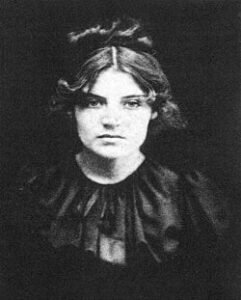
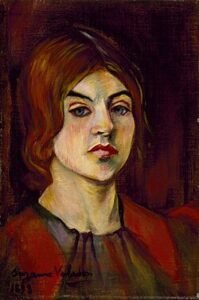
She always loved art. She watched the artists of Montmartre and drew her own pictures as a child. After her accident, with few other choices left to her, she became a model for some of the top artists of the time, including Toulouse-Lautrec and Renoir. She had no money for art school, but she watched them as they worked, and she learned.
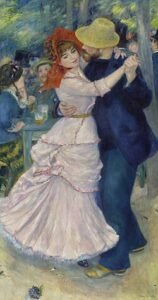
While she was still a teenager, Renoir seduced her, and she gave birth to her son Maurice at 18. Later, Spanish artist Miguel Utrillo adopted the boy, but paternity was never confirmed, and many people suspected the father might have been Renoir.

Steadfastly working on her technique and style, Suzanne became a popular artist in her own right. She was so good that Degas became her friend and mentor. He thought highly enough of her to purchase her works. She partied with Vincent van Gogh and all the best of the best. (Wouldn’t you love to have been a fly on that wall?)
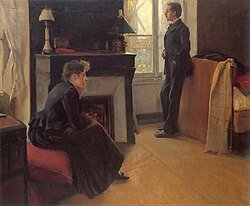
Not only did she paint, but she taught her troubled son as well, and he grew up to be a famous artist himself. (She managed his career.)
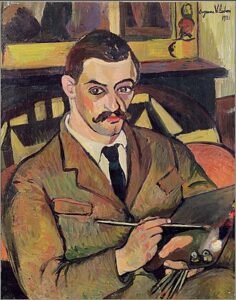
When she died at age 72, Picasso was at her funeral.
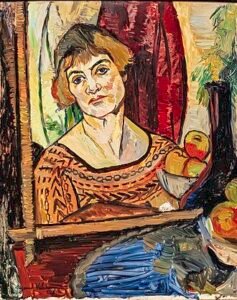
So why did I write about her? Because when she died, literally at the easel, her obituary in Le Figaro announced it as “the death of the wife of painter André Utter and mother of painter Maurice Utrillo.” They couldn’t acknowledge that she was also an artist in her own right.

And she was GOOD. She approached painting women completely differently from the male artists of the time.
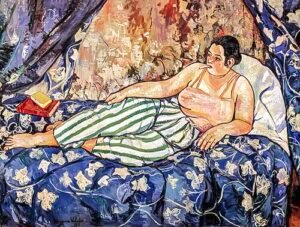
And she was famous and celebrated and successful, more so than most of her male contemporaries.

How successful was she? In 1923, she purchased the Château de Saint-Bernard, a medieval 14th-century fortress north of Lyon, complete with a drawbridge and a moat. She bought a luxury car (back when nobody had a car) to travel between her castle and Montmartre. She was a woman who lived on her own terms and made it.

So, no, we are not going to let history erase her!


If you’d like to find out more about her, try:

https://museedemontmartre.fr/en/musee-jardins/ (They preserved her studio.)

https://www.artbasel.com/stories/suzanne-valadon-centre-pompidou-19th-century-women-artist?lang=en (Art Basel’s introduction of her.)

Or read:

Girl Braiding Her Hair by Marta Molnar https://www.amazon.com/Girl-Braiding-Hair-Light-Life/dp/1940627656
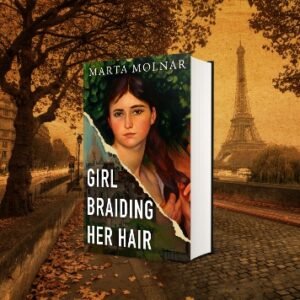
The Valadon Drama by John Storm https://www.amazon.com/Valadon-Drama-Life-Suzanne/dp/177323837X

Renoir’s Dancer by Catherine Hewitt https://www.amazon.com/Renoirs-Dancer-Secret-Suzanne-Valadon-ebook/dp/B074DYB11H/
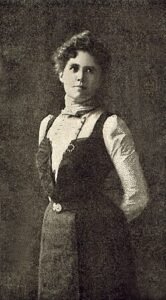
 

She Survived the Titanic, and It Was the Least of Her Adventures

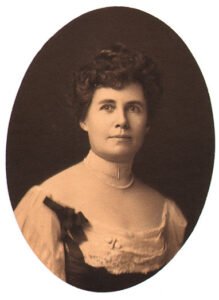
Helen Churchill Candee was another one of those remarkable women forgotten by history. Once I discovered her, I wanted everyone to meet her.

After her abusive husband ran off, leaving her with two small children, Helen supported her family by writing magazine articles. Desperate for the divorce that New York law wouldn’t grant her, in 1895 she traveled with her son and daughter to the more progressive Oklahoma Territory. (New York State didn’t pass its no-fault divorce legislation until 2010(!), making it the 50th and very last state to do so. If you’re having trouble believing this, welcome to the club. I had to go and confirm it from multiple sources, because I kept thinking Google had to be wrong.)

She loved the Wild West so much that she ended up staying several years, writing An Oklahoma Romance, the first novel about Oklahoma, and she even helped Oklahoma to gain statehood. While there, she also wrote another bestseller: How Women May Earn a Living. This was a huge problem for single/divorced/widowed women of a certain social class. They weren’t allowed physical work like factory work or taking in laundry, yet they had to survive somehow, sometimes supporting multiple children, like Helen.

She was nothing if not industrious. After moving back to the East Coast, she became one of the first interior decorators and helped not one but two First Ladies decorate the White House! I’m honestly awed by her. She wrote books but not just any books, bestsellers! She went to Oklahoma but didn’t just stay, she helped it become a state! She became one of the first practitioners of a brand-new profession but not only that, she decorated the White House!

She must have been a fiercely intelligent and self-motivated woman who was never for a moment too scared to try anything new.

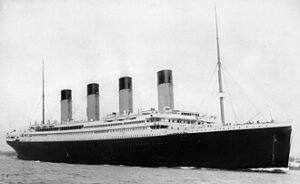
On the Titanic (she took the ship back from Europe, where she was on a research trip for yet another book), she broke her ankle when she jumped into the lifeboat. She was in the same boat as the Unsinkable Molly Brown, and they, along with other women, rowed the boat when the men gave up.

She had to walk with a cane for a year, but it didn’t stop her from riding her horse up the Capitol Hill steps to demand the right for women to vote, during the Votes for Women Parade.

In the First World War, Helen worked as a nurse with the Red Cross in Italy and ended up taking care of Ernest Hemingway at one point.

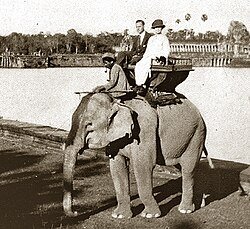
Once the war ended, she journeyed to Japan, China, Indonesia, and Cambodia, rode through the jungles on an elephant called Effie, and of course wrote a couple of bestselling books about her adventures. Angkor the Magnificent is the first major English-language book about the now famous ruins. The French government and the king of Cambodia honored her for her achievements, and in England, King George V and Queen Mary invited her to Buckingham Palace to give them a private reading.

What did this woman not do? You know what I mean? Just off riding elephants and then tea with the Queen of England. How is Helen not in the history books? There should be statues of her!

Oh, and she was also one of the founders of the Society of Woman Geographers. And she was still traveling internationally for National Geographic at age 80.

I really feel like I’m going to have to up my game.

She lived to age 90 and survived a disastrous flood in Oklahoma, the Titanic, the jungles of Southeast Asia, and two World Wars. I’m writing this near the anniversary of her death on August 23, 1949. So join me in offering this remarkable, intrepid woman a toast.

Long may she be remembered!

To find out more about her, please check out my book, RAISING THE TITANIC. Because, of course, I had to write about her. She cannot be forgotten! We’re not going to let that happen, right?

For further reading, I also recommend:

Life’s Decor: A Biography of Helen Churchill Candee by Randy Bryan Bigham

Encyclopedia of Oklahoma History and Culture – Candee, Helen Church

https://www.academia.edu/46104455/Angkor_the_Magnificent_Wonder_City_of_Ancient_Cambodia

https://bluecerealeducation.com/blog/helen-churchill-candee-introduction/