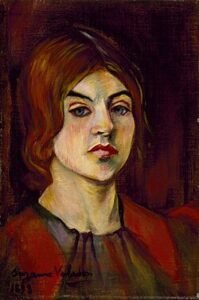
Suzanne Valadon was born into poverty, a fatherless bastard in Paris, at a time when legitimacy desperately mattered. She started working at age 11 and was a horse walker, a milliner’s assistant, a worker at a funeral wreath factory, and a waitress, until at age 15, she was finally hired by her dream job to be a circus acrobat.
Unfortunately, her circus career ended after just one year, when she fell from the trapeze and broke her back.
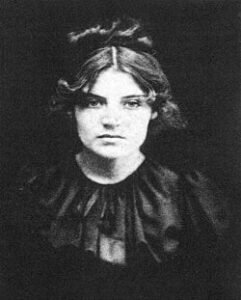
She always loved art. She watched the artists of Montmartre and drew her own pictures as a child. After her accident, with few other choices left to her, she became a model for some of the top artists of the time, including Toulouse-Lautrec and Renoir. She had no money for art school, but she watched them as they worked, and she learned.
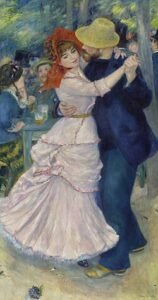
While she was still a teenager, Renoir seduced her, and she gave birth to her son Maurice at 18. Later, Spanish artist Miguel Utrillo adopted the boy, but paternity was never confirmed, and many people suspected the father might have been Renoir.
Steadfastly working on her technique and style, Suzanne became a popular artist in her own right. She was so good that Degas became her friend and mentor. He thought highly enough of her to purchase her works. She partied with Vincent van Gogh and all the best of the best. (Wouldn’t you love to have been a fly on that wall?)
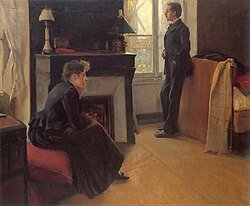
Not only did she paint, but she taught her troubled son as well, and he grew up to be a famous artist himself. (She managed his career.)
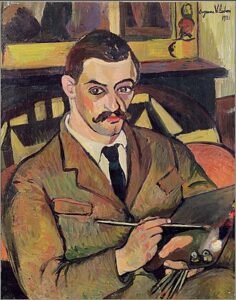
When she died at age 72, Picasso was at her funeral.
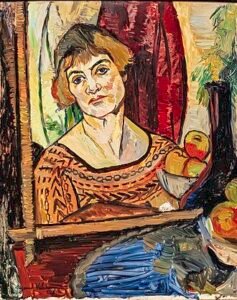
So why did I write about her? Because when she died, literally at the easel, her obituary in Le Figaro announced it as “the death of the wife of painter André Utter and mother of painter Maurice Utrillo.” They couldn’t acknowledge that she was also an artist in her own right.
And she was GOOD. She approached painting women completely differently from the male artists of the time.
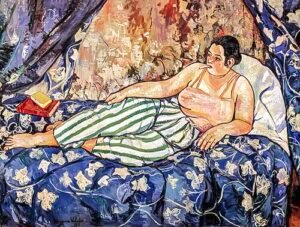
And she was famous and celebrated and successful, more so than most of her male contemporaries.
How successful was she? In 1923, she purchased the Château de Saint-Bernard, a medieval 14th-century fortress north of Lyon, complete with a drawbridge and a moat. She bought a luxury car (back when nobody had a car) to travel between her castle and Montmartre. She was a woman who lived on her own terms and made it.
So, no, we are not going to let history erase her!
If you’d like to find out more about her, try:
https://museedemontmartre.fr/en/musee-jardins/ (They preserved her studio.)
https://www.artbasel.com/stories/suzanne-valadon-centre-pompidou-19th-century-women-artist?lang=en (Art Basel’s introduction of her.)
Or read:
Girl Braiding Her Hair by Marta Molnar https://www.amazon.com/Girl-Braiding-Hair-Light-Life/dp/1940627656

The Valadon Drama by John Storm https://www.amazon.com/Valadon-Drama-Life-Suzanne/dp/177323837X
Renoir’s Dancer by Catherine Hewitt https://www.amazon.com/Renoirs-Dancer-Secret-Suzanne-Valadon-ebook/dp/B074DYB11H/